Select a post to read
Articles
A recapitulation of investing in pandemic times
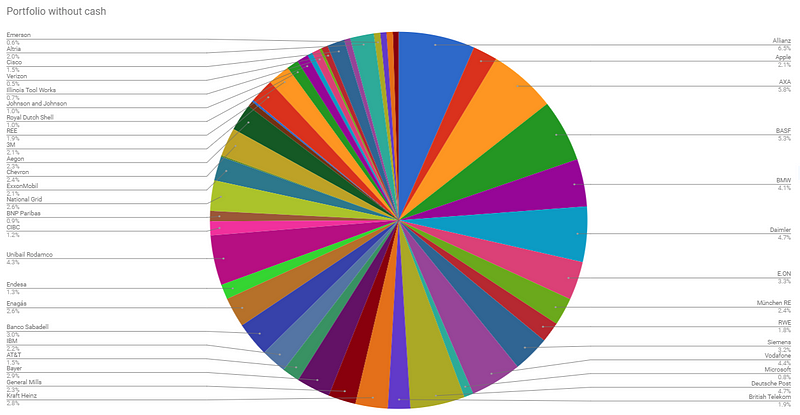
It has been around 14 months since the pandemic started. We have all been affected by it to a greater or lesser degree, and the investing world has not been an exception (although surprisingly, the stock market is one of the winners of the pandemic).
In this post I will share how the pandemic changed my investment thesis, the things I learned, and the mistakes I did. 14 months into the crisis of our generation (and with a few months to recover whatever the new normal will be), we now know that things will never be the way they used to be.
A short story of randomness (I)
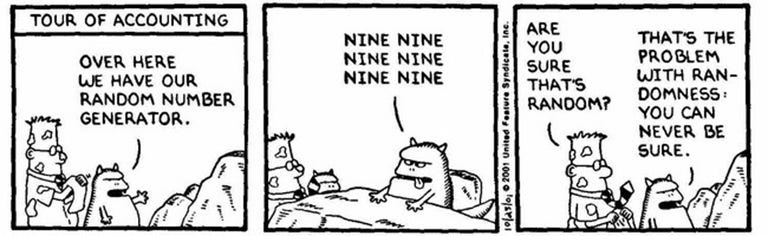
I have always been fascinated by the above comic strip. A discussion on randomness and determinism becomes as much a philosophical issue as it is a practical one. They are used in a variety of applications: from the obvious cryptography, gaming or gambling to the less evident politics or arts.
How can we be sure that a number is random? Will observing the process mine our efforts on generating the random number, similar to the observation of a cat inside a box with a decaying radioactive atom?

From Java to Kotlin and back (III): Calling Java from Kotlin
This article is part of a series. You can find the remaining article of the series here:
From Java to Kotlin and back (I) — Calling Kotlin from Java
From Java to Kotlin and back (II): Calling Kotlin from Java
In this last chapter of the series, we will evaluate consideration when calling Java code from Kotlin.
One could argue that even in this situation happens often, keeping considerations in mind for some code that might legacy is not that practical.

From Java to Kotlin and back (II): Calling Kotlin from Java
This article is part of a series. You can find the remaining article of the series here:
From Java to Kotlin and back (II): Calling Kotlin from Java
From Java to Kotlin and back (III): Calling Java from Kotlin
In the previous article, we explored how Java and Kotlin can interact with each other, and some considerations in this regard. In this second edition, we will keep reflecting on some relevant aspects to consider when Java is calling Kotlin.

From Java to Kotlin and back (I): Java calling Kotlin
This article is part of a series. You can find the remaining article of the series here:
From Java to Kotlin and back (II): Calling Kotlin from Java
From Java to Kotlin and back (III): Calling Java from Kotlin
I am currently working on a multi-module project that combines a variety of Java and Kotlin code, so I decided to publish my thought and notes as an article series. It will likely help me as a journaling practice, and hopefully can help other potential readers that end up here trying to find some tips while they are facing the same problem.

Considerations when creating Android libraries
If you are an Android developer, chances are you might have been working on your own Android libraries. A library is a useful way to create a reusable set of features that need to be integrated through different apps (or even different libraries).
A library is a self-contained package including code and resources required to execute some functionality. Importing a library in our Android app is the same process as importing a .

GitHub Actions for Android developers
If you are developing Android apps, chances are you have confronted any sort of CI at some point in your career. If you thought Android fragmentation was a thing, the wide availability of CI systems will be familiar to you.
GitHub Actions was released around November 2019, and since then it has proved itself to be reliable for a production environment (one of our requirements before committing to any software system).

Using the Signature class to verify data
When there is an exchange of information happening, we often want to verify that the origin of the data is the right one. This can be used to ensure that the right clients are having access to our resources.
For instance, let’s imagine that we want to ensure that an authorized device is querying a file with sensitive information from our backend. An immediate solution could be to use a X-Api-Token in our device.

Managing the Kotlin Weekly
I just sent the issue #182 of the Kotlin Weekly. #182 means that this has been the week 182 that the Kotlin Weekly is alive. Many things have changed since the first edition on the 7th of August 2017, sent to over 200 initial subscribers with 5 articles.
In some of the first editions, the content was so scarce that I ended up writing my own articles to include them, or adding some code snippets I posted on Twitter.

2019 in retrospective
This year is over. During the last 365 days, I fulfilled some of the goals I meticulously established at the beginning of the year. In other goals, I failed without palliatives or anesthesia.
During the last 9 years, I have been following a process to determine my goals for the upcoming solar rotation. I sit at a coffee place next to my home in Munich, order a ginger tea and take notes.