Select a post to read
Articles

A Gentle Introduction to Investing for Software Engineers (IV) — My methodology to determine which…
You can access all the articles of the series through the following links:
(I) — Motivation
(II) — Compounding interest and introducing other factors
(III) — Determining a company value and acquisition point
(IV) — My methodology to determine which stock to buy
In this fourth and last article of the series, I will explain my methodology to acquire individual stock in the market. Most of the guidelines I expose are thought of as a guideline that you might need to adapt depending on your circumstances (for instance, the double taxation will play a role depending on your tax residence).

Re-post: Which city has the most intense Android scene in Europe?
I wrote this post originally 5 years ago. For a side project, I had to use the StackExchange data explorer again, so I decided to revisit it and update the numbers.
StackExchange Data Explorer is an open-source tool to run SQL queries against public data from StackOverflow. Since StackOverflow is the biggest development forum of the world, there is surely a lot of information that companies can actually retrieve from their system in order to take some business decision (this is actually a brilliant place to apply BigData)

Using Git Hooks to improve your development workflow
Recently, I was contributing for the first time to a new codebase. I extended and implemented some functionality that I needed. After thorough testing on my machine, where I checked that the functionality was properly working, I committed my contribution. Minutes after, our CI environment delivered a message:
4 Tests failed
This happens so often, even on the codebases we are used to work with. We tend to focus on developing the new features, and forget that there is a test that is covering them.
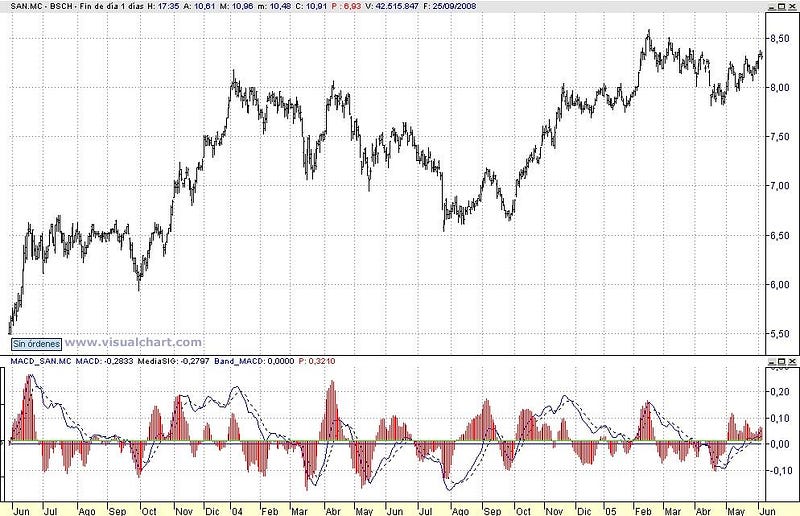
A Gentle Introduction to Investing for Software Engineers (III) —Determining a company value and…
You can access all the articles of the series through the following links:
(I) — Motivation
(II) — Compounding interest and introducing other factors
(III) — Determining a company value and acquisition point
(IV) — My methodology to determine which stock to buy
In this third article of the series, I am giving an introduction to some of the factors that we commonly use to determine whether a company is apt for our investment strategy, whether it is the right moment to acquire stock, and in general to provide us some insight beneath the numbers.

A Gentle Introduction to Investing for Software Engineers (II) — Compounding interest and…
You can access all the articles of the series through the following links:
(I) — Motivation
(II) — Compounding interest and introducing other factors
(III) — Determining a company value and acquisition point
(IV) — My methodology to determine which stock to buy
In this second article of the series, I want to keep exploring some metrics to show the evolution of our investment keeping in mind different scenarios. This time I will be including screenshots from a Google Spreadsheet instead of displaying text tables.

A Gentle Introduction to Investing for Software Engineers (I) — Motivation
You can access all the articles of the series through the following links:
(I) — Motivation
(II) — Compounding interest and introducing other factors
(III) — Determining a company value and acquisition point
(IV) — My methodology to determine which stock to buy
If you are reading this article, chances are you a Software Engineer that has ended up here looking up for saving, investment or retirement advice. Or maybe you have a different profession, but ended up here anyway.

Approaching a methodology to select speakers for conferences
After a great first edition, this year I organised the second edition of the Droidcon Vietnam with some local folks. Before I organised a conference like this, my experience was limited to local Meetups in Munich (I am currently the organiser of the Kotlin User Group Munich, and the Firebase User Group Munich). The latter has a different nature in terms of resources, logistics and efforts required. They are community-based events, local and — without requiring an easy trajectory — they are certainly less complex than the former.

Creating a library for Android: The Good, the Bad and the Ugly
Software Development is like an Ouroboros. You end up going to the place you have previously resided, with requirements and knowledge updated and refashioned. You might have started working on an initial prototype that began the journey as a basic HelloWorld, and it has evolved into one of those mythological Nordic monsters. Or maybe Greek monsters are more terrifying and frightening. I do not know.
At one of my projects we recently came up with the requirement of extracting some of the functionality well buried there to expose to third-party consumers.

On Strategies to apply Kotlin to existing Java code
Since the latest announcement at the Google I/O, things have been crazy. At the Kotlin Weekly Mail List we had an increase in subscribers over 20% in the last two weeks, over 200% increase in article submissions, and at a Meetup I organise (Kotlin Users Group Munich) we had a huge increase in attendees. And all this combined with the general blast in the developers community.
A trend that will only continue to grow.

A follow-up on how to store tokens securely in Android
As a prologue to this article, I want to remark a short sentence for the notional reader. This quote will be important as we move forward.
Absolute security does not exist. Security is a set of measures, being piled up and combined, trying to slow down the inevitable.
Almost three years ago, I wrote a post giving some ideas to protect String tokens from a hypothetical attacker decompiling our Android application.